

Today, I’m opening this blog by sharing about one of the authors who has most deeply influenced my path as an early childhood educator, Emmi Pikler.
I’m talking about Emmi Pikler — the Hungarian pediatrician who introduced a groundbreaking way of understanding and caring for young children, transforming the practices of countless educators and families around the world.
Few have captured so vividly and authentically how children relate to and make sense of the world as Pikler and her team at the Lóczy Institute in Budapest.
In this first article, you’ll find a glimpse into her life and pedagogical ideas, together with practical reflections and materials you can bring into your own practice.
What will you find in this post?
- Biography of Emmi Pikler
- Pedagogical contributions
- Further resources
1. Emmi Pikler’s Biography
To truly understand an author’s ideas, it’s always valuable to look first at what shaped their way of seeing the world — their experiences, influences, and the context of their life.
Here’s a brief look into the life and work of Emmi Pikler.
Her beginnings as a pediatrician
Emmi Pikler was born in Vienna at the beginning of the 20th century but spent most of her life in Budapest.
Several experiences may have deeply influenced her way of understanding children and her transformative spirit:

- One of the most decisive moments in her formation took place during her training at the University Children’s Hospital of Vienna, where she worked under Dr. Pirquet. There, she observed how doctors cared for children with remarkable gentleness, aiming to prevent them from crying during medical procedures.
Pikler noticed that it wasn’t necessary to distract or deceive children — what truly mattered was building a relationship based on trust. Doctors would explain to the child what they were about to do and wait for their cooperation. They also emphasized the importance of comfortable clothing, time outdoors, and opportunities for play, even in the hospital setting. - Her Jewish background in a time of growing antisemitism in Hungary, and her possible connection to the Hungarian progressive and communist movements, may also have contributed to her strong sense of social justice and determination.
Pikler married György Pikler, a progressive pedagogue whose ideas also enriched her professional journey.
Emmi Pikler began her career as a family pediatrician, visiting children in their homes and observing their development — not only in illness but in everyday life. She believed that physical health was deeply connected to the quality of the child’s environment and relationships.
The transformation of Lóczy
After World War II, in 1946, the Hungarian government invited Pikler to direct an orphanage in Budapest — a Home for Infants caring for children whose families could not look after them.
The centre, located on Lóczy Street (hence the name Lóczy), was completely transformed under Pikler’s leadership.
Her aim was not to replicate family life — which she knew was impossible — but to offer children an experience of care and respect that would allow them to grow as whole human beings, without the deep emotional deprivation so common in institutional care.
When Pikler realised how difficult it was to change the attitudes and habits of the existing caregivers, she decided to rebuild the team entirely. She recruited young women without formal training but with a genuine interest in education and care.
These new caregivers received detailed guidance about every aspect of daily life: the kind of furniture to use, the design of utensils and toys, the type of clothing, and so on. Everything was grounded in Pikler’s years of observation and reflection on children’s natural development.
Under her direction, Lóczy evolved from a simple orphanage into a centre of respectful care and applied research, where practice and theory enriched one another.
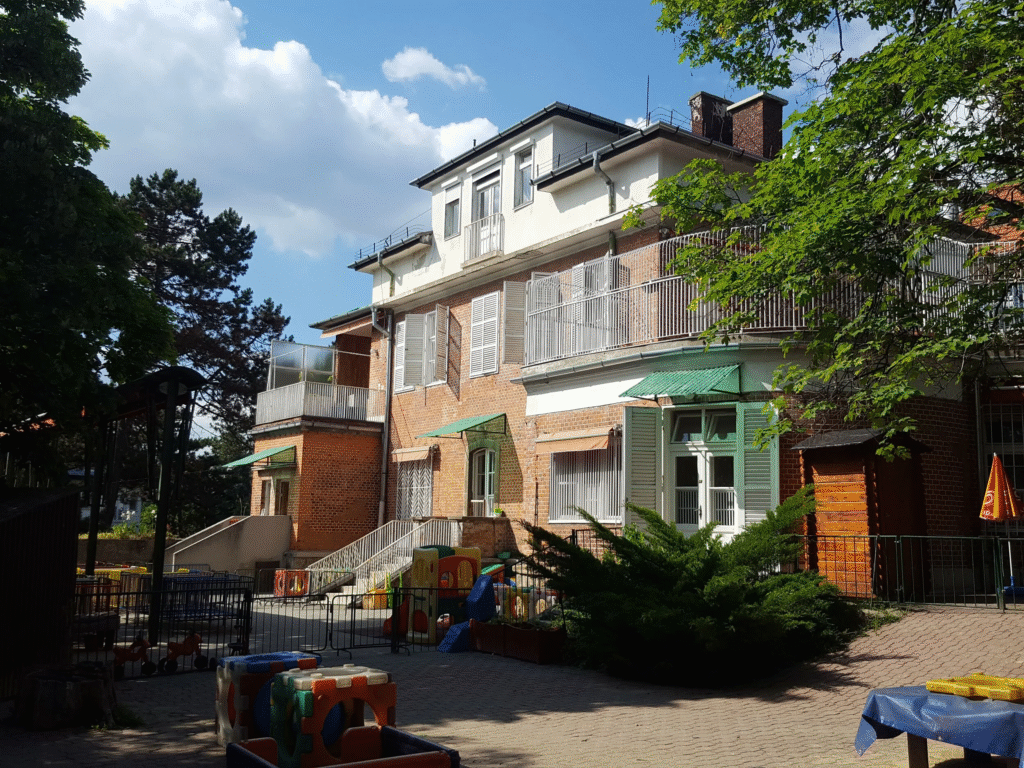
The Emmi Pikler Institute today
Today, the centre continues as the Emmi Pikler Institute. It no longer functions as an orphanage, due to the growth of foster care and family-based systems, but it maintains its mission through a nursery for children aged 0–3 and a training and research centre.
Many of the educators who once worked alongside Pikler — or were trained by her team — continue to offer professional development and training around the world, ensuring that her research and philosophy remain alive.
Their ongoing work reminds us that if we wish to build a respectful society, we must begin by learning to respect what is most essential — early childhood.
If you would like to learn more about Emmi Pikler’s life, you will find recommended readings and videos at the end of this article to explore her work at Lóczy in more depth.
Pedagogical Contributions
One of Emmi Pikler’s most significant contributions — and the foundation of all her theories — was the transformation of how adults see and understand babies and young children.
She stopped viewing them as future citizens in the making and began recognising them as whole human beings from birth — individuals with autonomous thought and their own inner drive to act and learn.
From this belief, Pikler dedicated herself to observing children closely and creating the optimal conditions for their natural and self-initiated development to unfold.
Below are some of the key principles she identified.
1. Free Movement
Our first way of relating to the world is through our body. It is how we connect, touch, and experience life.
Pikler noticed how much effort adults put into helping children reach milestones, especially learning to walk, and how often this focus leads to unnecessary interference.
Through years of careful observation, she demonstrated that babies naturally practise a wide range of movements and postures from birth, each one preparing them for the next stage, leading eventually to upright walking.
Standing and walking are among the most complex achievements of human development (they took our species centuries to master), so it makes sense that babies need time, practice, and freedom to reach them on their own.
Pikler meticulously studied these subtle stages — often invisible to the untrained eye — and documented each posture and transition, incorporating them into her understanding of motor development.
From then on, development was no longer measured simply as “crawling or walking”, but seen as a rich continuum of discoveries, each one acknowledging the enormous effort and competence of the baby long before their first steps.
Babies naturally explore movements and postures long before they take their first steps.
Respecting these early stages means giving them the physical and emotional conditions they need to learn to walk — in their own time and in their own way.Nerea Aller
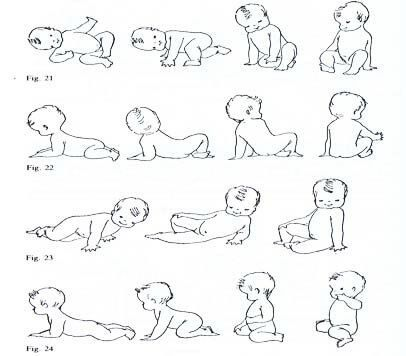
The postures and movements described by Pikler’s research remind us that respect begins with the body.
Learning to honour these natural positions is the first step toward respecting everything that will come later — a child’s own timing to learn the multiplication table, to read, to make friends, or to ride a bicycle.
2. The importance of a stable relationship
Alongside respecting children’s natural movement, Pikler considered it essential to ensure a stable and consistent relationship with a trusted adult.
As social beings — and given that we are born before we are fully mature — we need a first, secure bond that provides the physical, psychological, and emotional foundation for our development.
In a centre where there were several adults caring for many children and staff changes could occur, Pikler and her team developed specific strategies to preserve this emotional security.
For instance, each small group of children was assigned a primary caregiver who remained with them over time. The routines of daily care — such as bathing, eating, nappy changing, and sleeping — were organised calmly and predictably, so that children could learn to wait for their turn and anticipate what would happen next.
Through this continuity and predictability, the children at Lóczy experienced a sense of external stability that mirrored the emotional safety usually found within a family.
3. Verbal and Nonverbal Communication

Another cornerstone of the Lóczy approach was communication — both verbal and body language.
Every gesture and word from the adult reflected respect, attentiveness, and genuine listening to the child’s needs.
During care routines such as dressing or mealtimes, adults would wait for the child’s cues — through gaze, gestures, or sounds — before proceeding, ensuring the child’s participation and consent.
Even today, at the Pikler Institute, educators continue to speak to children about what is happening throughout the day.
This narration creates connection, predictability, and trust in the relationship between adult and child.
Even though babies may not yet speak, they communicate powerfully through their bodies and understand what is happening on an emotional and relational level.
It’s no surprise that they cry when another child cries or become tense when the adult caring for them feels stressed.
Words — spoken calmly and sincerely — help both adult and child to relax, understand, and connect with what is taking place.
4. Autonomous Play
In addition to observing movement and relationships, Pikler also studied children’s play — how they interacted with materials, with space, and with one another.
She defended the idea that learning happens through action, and therefore it is essential to allow children to build their own play experiences freely.
This vision of learning places the adult behind the child, inviting educators to play less and observe more.
Even today, this can be difficult for many adults, as we often associate play with our own ideas of fun and participation.
Yet the educator’s true role is not to lead or entertain, but to create the conditions for the child’s self-initiated exploration — to make space for learning that comes from within.
5. Care Moments as Learning Opportunities
Everyday routines such as changing a nappy, having a meal, or brushing hair — moments often seen as purely functional — were also viewed by Pikler as precious opportunities for learning and connection.
She believed that children do not separate life into “play time” and “care time”; they learn continuously, through every experience.
For this reason, Pikler saw care moments as shared learning experiences, where both adult and child get to know and recognise one another as persons.
These routines were not interruptions in the child’s day, but a continuation of life and development. They provided the ideal setting to practise all her principles: free movement, attentive observation, narration, and genuine presence.
The adult’s task was to respect the child’s pace and movements, offering time, presence, and gentle attention to create a truly pleasant interaction.
Through slow, mindful actions and mutual gaze, a unique sense of intimacy and empathy emerged.
Anyone who watches the videos from Lóczy — especially those showing nappy changes or dressing — can feel this deep relationship of trust, democracy, and mutual respect between adult and child.
6. The Role of the Adult
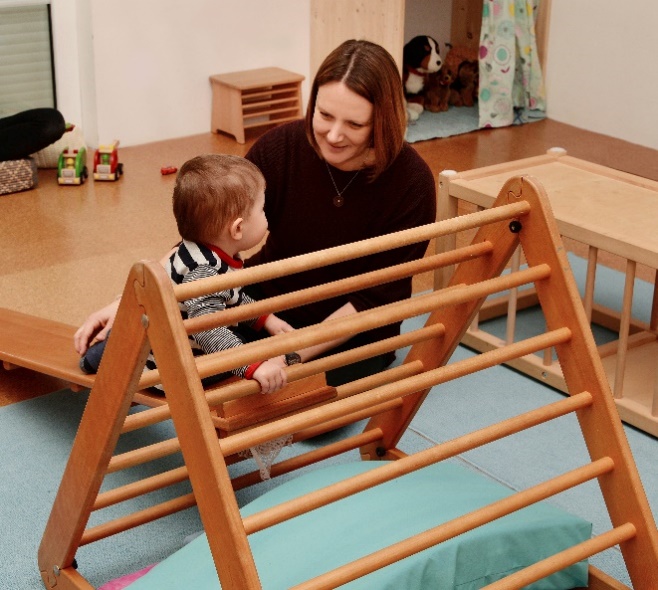
This is perhaps the most powerful — and also the most challenging — aspect of Pikler’s approach.
As adults, we carry the wisdom that comes with experience, but we are also easily deceived by appearances.
We often believe that knowing more entitles us to be respected, forgetting that others — especially young children — also have much to teach us.
True respect can only exist when it is mutual.
When we lower our heads and truly recognise babies and young children as people in their own right, with their own rhythms and needs, we become able to listen — to sense what they need in each moment of their development.
In this way, both educators and families learn to guide from behind, following the child’s interests and pace rather than leading from the front.
They trust the child’s innate ability to understand and learn, reading nonverbal cues and adapting to their movements and expressions.
Rather than forcing, they observe.
At Lóczy, educators paid close attention to every small detail in a child’s movement and gestures — their quality, variety, and how they related to the surrounding space and to others.
When we observe a baby’s movement or play, we ask ourselves: What is this child able to do today?
We reflect on what they could do yesterday and trust in what they will be able to do tomorrow.Nerea Aller
7. The Environment
Beyond verbal and nonverbal communication, one of the most powerful ways to support children’s development and sense of security is through the environment.
At Lóczy, great care was taken to prepare spaces that responded to several essential characteristics:
- Physical safety
Each environment was designed for a specific purpose — play, mealtime, bathing, resting — and prepared to ensure children could explore freely without danger.
Outdoor time was also prioritised to support physical health and wellbeing, even during the colder months. - Responsiveness to children’s interests
Materials and spaces were carefully chosen to reflect children’s current interests, developmental stages, and group size. - Freedom of movement
Open, uncluttered spaces encouraged natural movement, offering structures that invited children to explore new postures and transitions.
Clothing was kept light and comfortable — or sometimes unnecessary altogether — depending on the temperature and the child’s needs. - Emotional security
The presence or visibility of a familiar adult was considered essential.
This is why, in videos from the Lóczy Institute, you can often see low partitions separating play areas from care areas. These allowed children to see their caregiver even when that adult was tending to other tasks or children — maintaining a reassuring sense of connection and safety.
Further Resources
If you’d like to explore more about how Pikler’s ideas can transform your own practice, you can continue reading the article:
“Emmi Pikler in your daily practice”, where I translate her theoretical principles into practical reflections for daily work with children.
You might also enjoy:
“Play in the First Year of Life: Development, Environment, and Materials”, which takes a closer look at the changes that occur during the baby’s first year and how to accompany these processes respectfully.
And if you’d like to dive even deeper into Emmi Pikler’s legacy — through her own writings and those of her successors — I recommend the following links: